
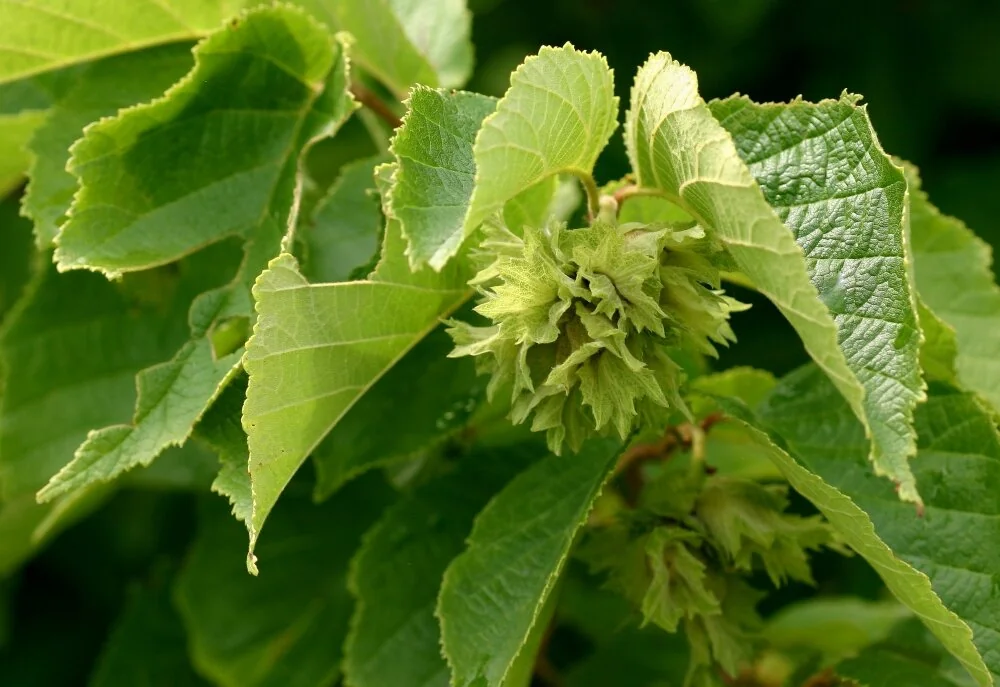
American Hazelnut
$29.00 Original price was: $29.00.$8.70Current price is: $8.70.
1000 in stock
SKU: SpGvmjYyem
Category: CRAFTSMEN PICKS
LIGHT: Full sun, Partial sun
WATER: Water when top 3 inches of soil is dry.
SIZE: Reaches 15-18 ft. tall and 10-12 ft. wide.
| Description | A native to eastern North America, this small tree or multi-branched shrub produces edible nuts in fall. Showy male flowers appear in spring, in the form of elongated tan catkins, while the female flowers are reddish and inconspicuous. Foliage turns golden yellow to red to purple in autumn. The dense, low growth habit provides excellent habitat for birds and wildlife. |
|---|---|
| Bloom Time | Showy catkins in spring |
| Deciduous/Evergreen | Deciduous |
| Special Features | Easy Care, Fall Color, Showy Fruit, Edible, North American Native, Benefits Birds |
| Growth Rate | Moderate |
| Flower Attributes | Showy Flowers |
| Landscape Use | Border |
| Flower Color | Yellow |
| Foliage Color | Green |
| Foliage Fall Color | Orange |
| Care Instructions | Follow a regular watering schedule during the first growing season to establish a deep, extensive root system. Watering can be reduced after establishment. Feed with a general purpose fertilizer before new growth begins in spring. Will spread by root suckers; clip to prevent spread if desired. |
| Lore | Corylus americana is monoecious, meaning it produces separate male and female flowers on the same plant, with both male (tan catkins) and female flowers (red stigma style) being exhibited during flowering season. The nuts of American hazelnut (also known as the American filbert) have a higher nutritional value than acorns and beechnuts. |