
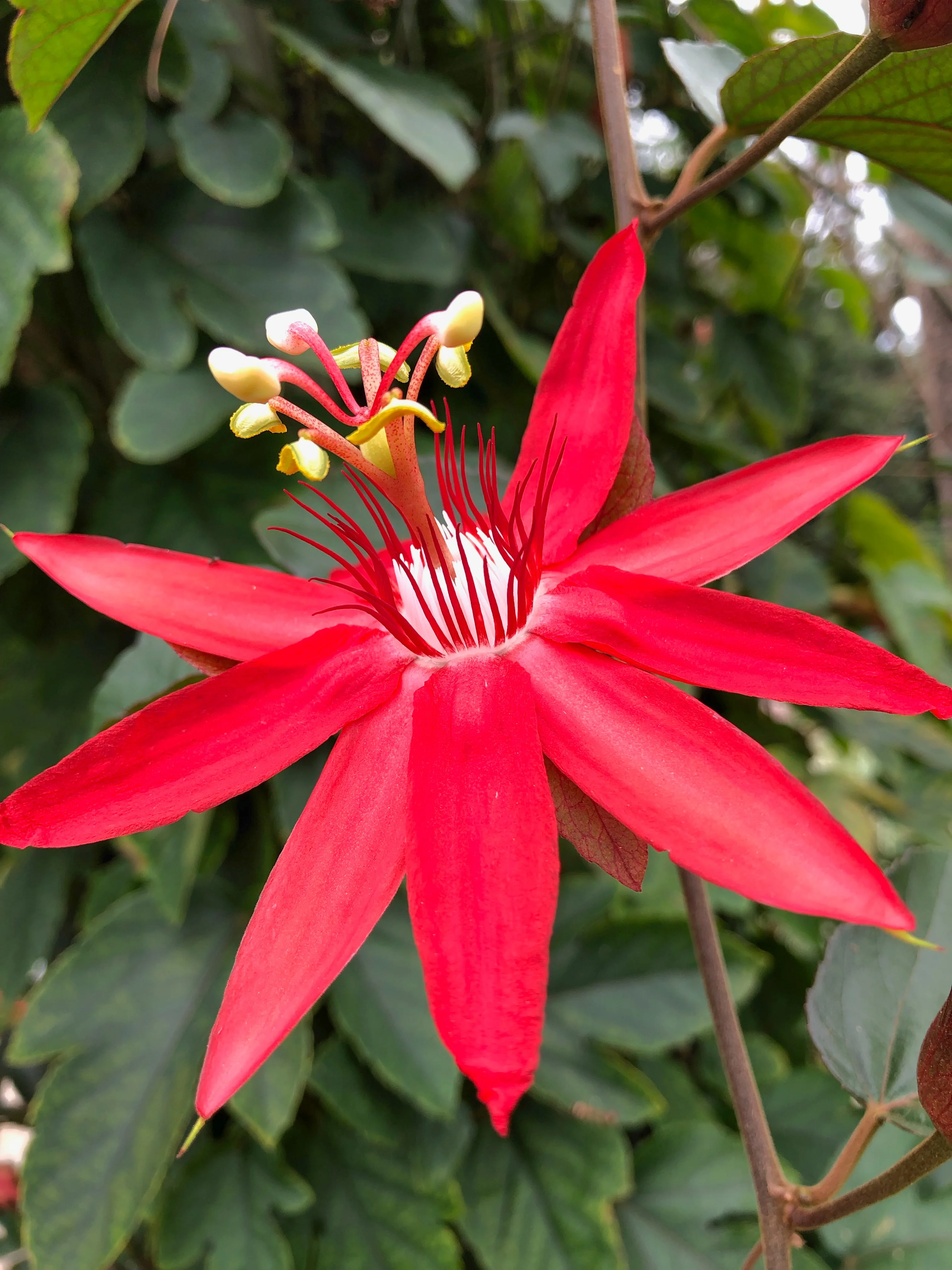
Crimson Passion Flower
$130.00 Original price was: $130.00.$39.00Current price is: $39.00.
1000 in stock
SKU: 4o23twvVJc
Category: BESTSELLERS
LIGHT: Full sun
WATER: Keep soil consistently moist but not soggy.
SIZE: Twining stems quickly climb 15 to 20 ft. tall, with support.
| Description | This outstanding vigorous vine displays exotic crimson flowers in great abundance backed by rich green, deeply-lobed, glossy foliage. Produces small yellow-green fruit with edible pulp. An outstanding choice to quickly cover a trellis, arbor, or fence. Prefers a warm, sunny location. Evergreen. |
|---|---|
| Bloom Time | Summer |
| Deciduous/Evergreen | Evergreen |
| Special Features | Attracts Hummingbirds, Easy Care, Showy Fruit, Waterwise, Edible, Attracts Pollinators, Fast Growing, Benefits Birds |
| Problems/Solutions | Coastal Exposure |
| Growth Rate | Fast |
| Growth Habit | Climbing |
| Flower Attributes | Showy Flowers |
| Landscape Use | Espalier, Privacy Screen |
| Design Ideas | Crimson Passionflower is best kept up close, where its color and form is most appreciated. Great grower for shade arbors, where it can snake up posts of wood, concrete or classical stone columns and hang most gracefully. A tropical plant that should be sheltered in a warm place, such as a protected side yard, fenced condominium patio or walled entry court. Stunning when trained over the top of a front-door entry. This equatorial jungle plant of South America is ideal for atriums with lots of light. |
| Flower Color | Red |
| Foliage Color | Green |
| Companion Plants | Gardenia (Gardenia); Princess Flower (Tibouchina); Fountain Grass (Pennisetum); Banana Shrub (Michelia figo); Giant Bird of Paradise (Strelitzia nicolai) |
| Care Instructions | Grows best in loose, lightly sandy soil, in a location that allows roots to spread and plenty of air flow around foliage; provide support such as trellis or arbor. Water deeply and regularly during first growing season to establish an extensive root system; reduce frequency, once established. Prune annually to control size. |
| History | This vibrant red species is native to a huge range over Central and South America where it is known as red grenadilla. Passionflowers attract butterflies because they are larval food plants for many species. |
| Lore | Passionflower was named for the complex shapes within the flower which Christians used a symbols of Christ’s passion. |