
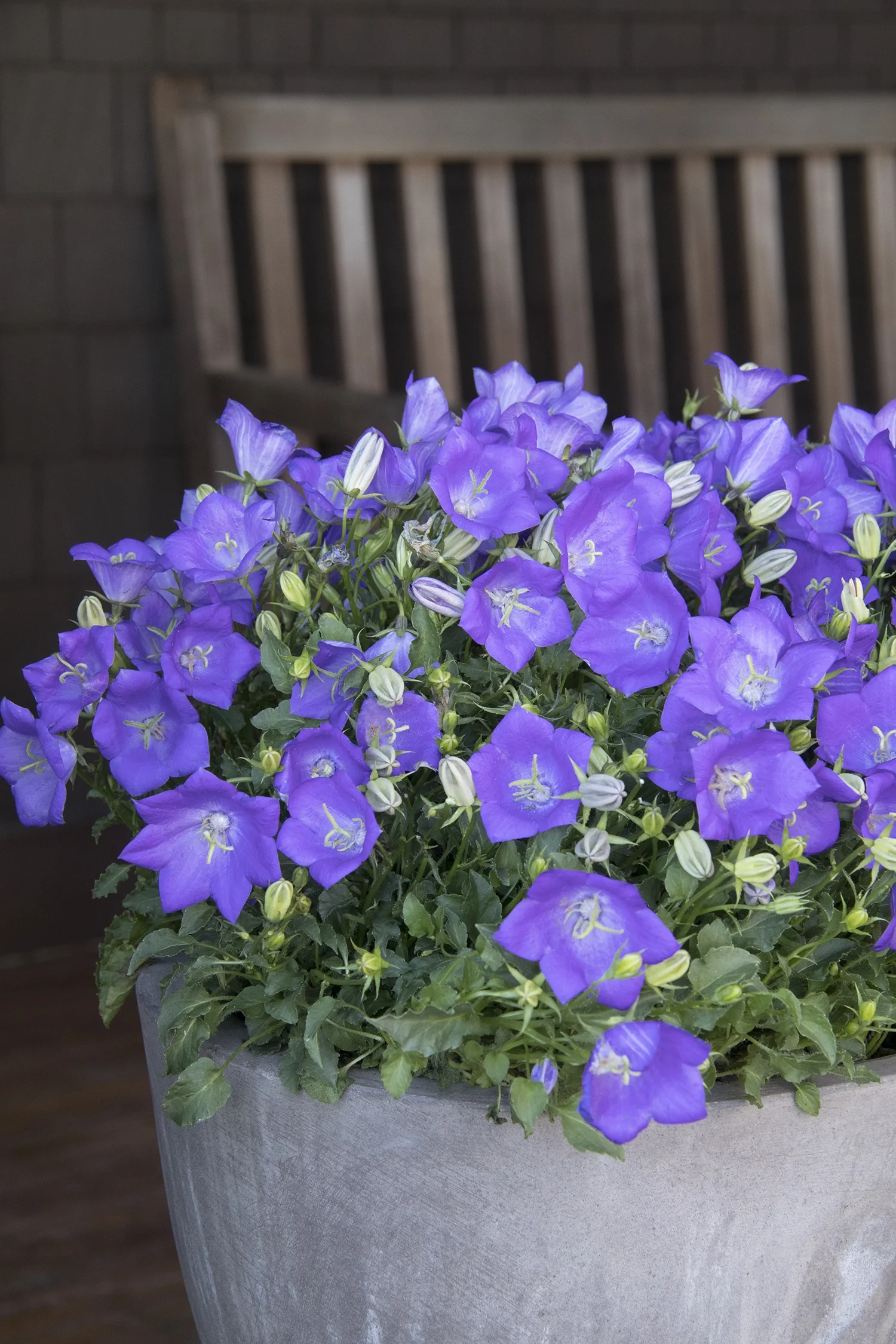
Deep Blue Clips Bellflower
$77.00 Original price was: $77.00.$23.10Current price is: $23.10.
1000 in stock
SKU: 54hESA91dL
Category: Perennials
LIGHT: Full sun, Partial sun
WATER: Keep soil moist, but not soggy.
SIZE: Fast growing; reaches 6 to 8 in. tall, 8 to 12 in. wide.
| Description | Creates a carpet of upturned, bell-shaped, blue flowers that will last for several months in summer. A favorite for rock gardens. Works equally well in containers, fronts of borders, and massed as a groundcover. An herbaceous perennial. |
|---|---|
| Bloom Time | Summer |
| Deciduous/Evergreen | Herbaceous |
| Special Features | Attracts Pollinators, Fast Growing |
| Problems/Solutions | Deer Resistant, Rabbit Resistant, Very Wet Areas |
| Growth Rate | Fast |
| Growth Habit | Spreading |
| Flower Attributes | Flowers for Cutting, Long Bloom Season, Showy Flowers |
| Landscape Use | Border, Container, Poolside, Ground Cover |
| Design Ideas | Plant bellflowers at the front of the border to create a tidy edge in bloom or out. Use to line a flagstone path. Makes a beautiful groundcover at the edge of woodland plantings where there’s more sun. Lovely choice at the base of dry stone walls and rock gardens. |
| Flower Color | Blue |
| Foliage Color | Green |
| Companion Plants | Cranesbill (Geranium); Avens (Geum) Coral Bells (Heuchera); Daylily (Hemerocallis); Coneflower (Echinacea) |
| Care Instructions | Thrives in moist, very well-drained soils. Shelter from harsh afternoon sun in hottest climates. Water deeply, regularly during first growing season to establish an extensive root system; once established, water as needed to maintain evenly moist soil. Feed in spring, repeat during growing season. Divide every 2 to 3 years in early spring. |
| History | This singnature genus of the bellflower family contains about 300 species found in the northern hemisphere around the world. This species is native to the Carpathian Mountains of southeastern Europe. |
| Lore | Old European folklore tells that fairies once made their homes inside bellflowers. |