
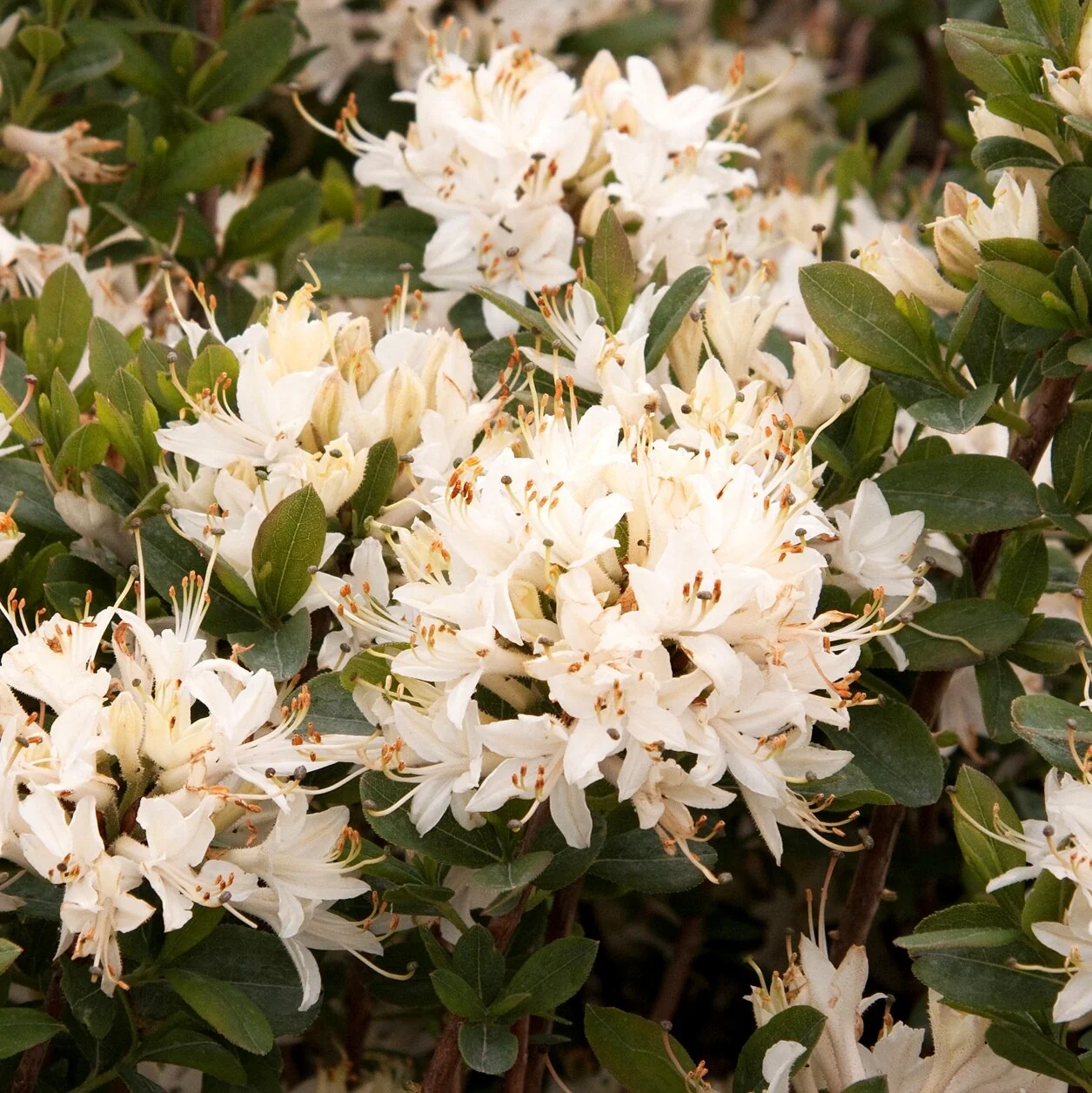
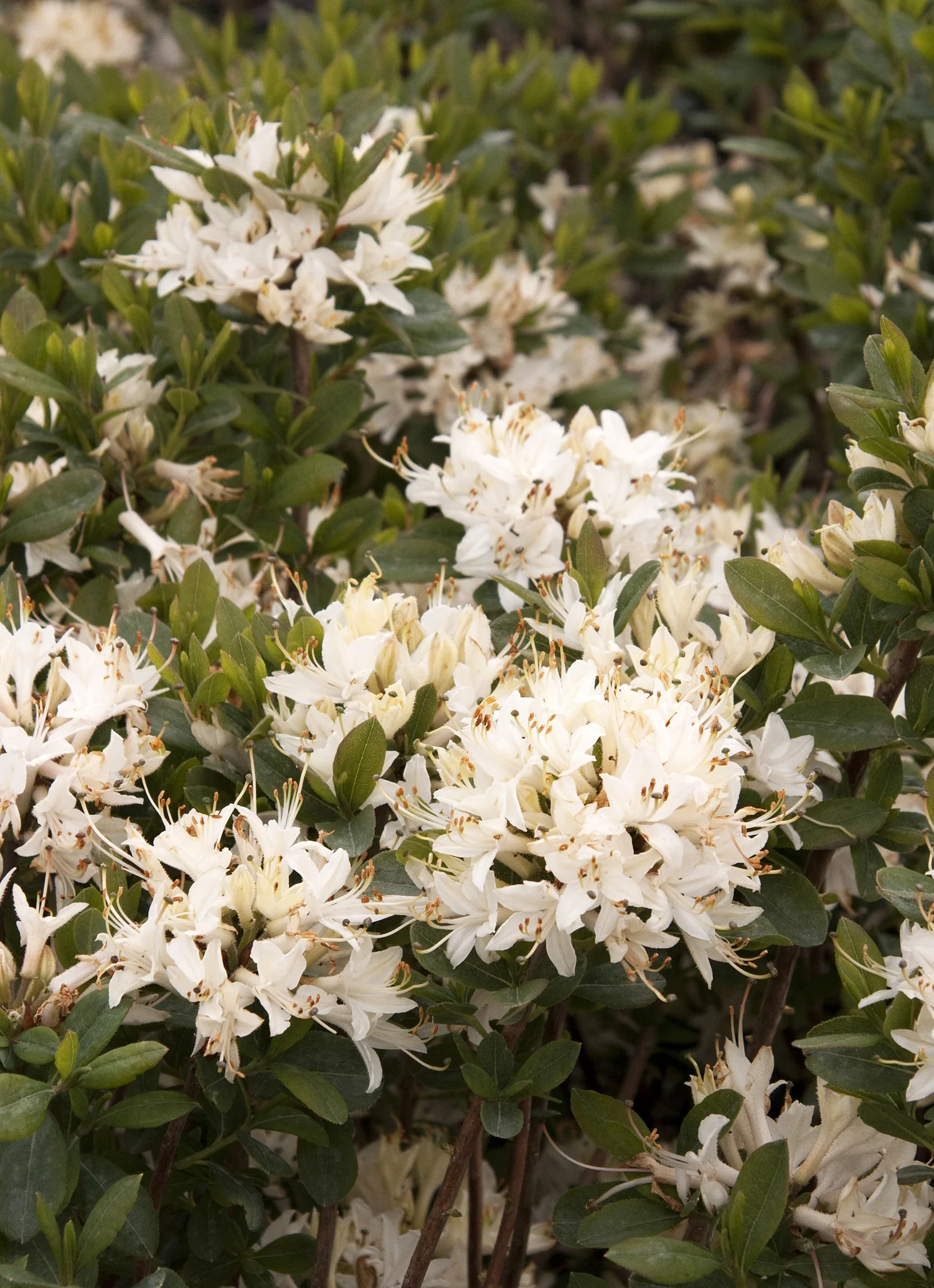
Fragrant Star Azalea
$104.00 Original price was: $104.00.$31.20Current price is: $31.20.
1000 in stock
SKU: jeen5dPxV0
Category: Flowering Shrubs
LIGHT: Full sun, Partial sun
WATER: Keep soil moist, but not soggy.
SIZE: Slow growing; reaches 4 to 5 ft. tall, 3 to 4 ft. wide.
| Description | A fragrant, deciduous azalea named for its extremely aromatic, large, five-petaled, snowy white flowers that top the blue-green foliage on a strong, upright habit. Relatively cold hardy and heat tolerant for an azalea, and powdery mildew resistant. Mass in the dappled shade or perimeter of a woodland garden, or add to a mixed shrub border. |
|---|---|
| Bloom Time | Spring |
| Deciduous/Evergreen | Deciduous |
| Special Features | Attracts Hummingbirds, Easy Care, Improved Pest and Disease Resistance, Attracts Pollinators |
| Growth Rate | Slow |
| Flower Attributes | Fragrant, Showy Flowers |
| Landscape Use | Border, Hedge |
| Flower Color | White |
| Foliage Color | Silver-blue |
| Companion Plants | Viburnum (Viburnum); Astilbe (Astilbe); Coral Bells (Heuchera); Dogwood (Cornus); Rose Of Sharon (Hibiscus) |
| Care Instructions | Thrives in humus-rich, acidic, well-drained soils. Shelter from harsh sun exposures in hot summer areas. Water deeply, regularly during the first growing season to establish an extensive root system; once established, maintain evenly moist soil. Keep roots cool with a layer of mulch. Prune to shape and apply an acid fertilizer after flowering. |
| History | A polyploid form (doubled chromosomes) of ‘Snowbird,’ considered by many to be the most fragrant deciduous azalea. It retains all the good qualities, but has larger, pure white flowers, more substantial leaves and thicker branches. It has the same beautiful glaucous (blue) foliage and is also extremely fragrant. Found at North Carolina’s Biltmore Estate |
| Size | #2 – 1.6 Gallon |
|---|