
LIGHT: Filtered sun, Full shade, Partial shade
WATER: Water when top 2 inches of soil is dry.
SIZE: Slow growing initially; vigorous with age, climbing 10 to 15 ft.
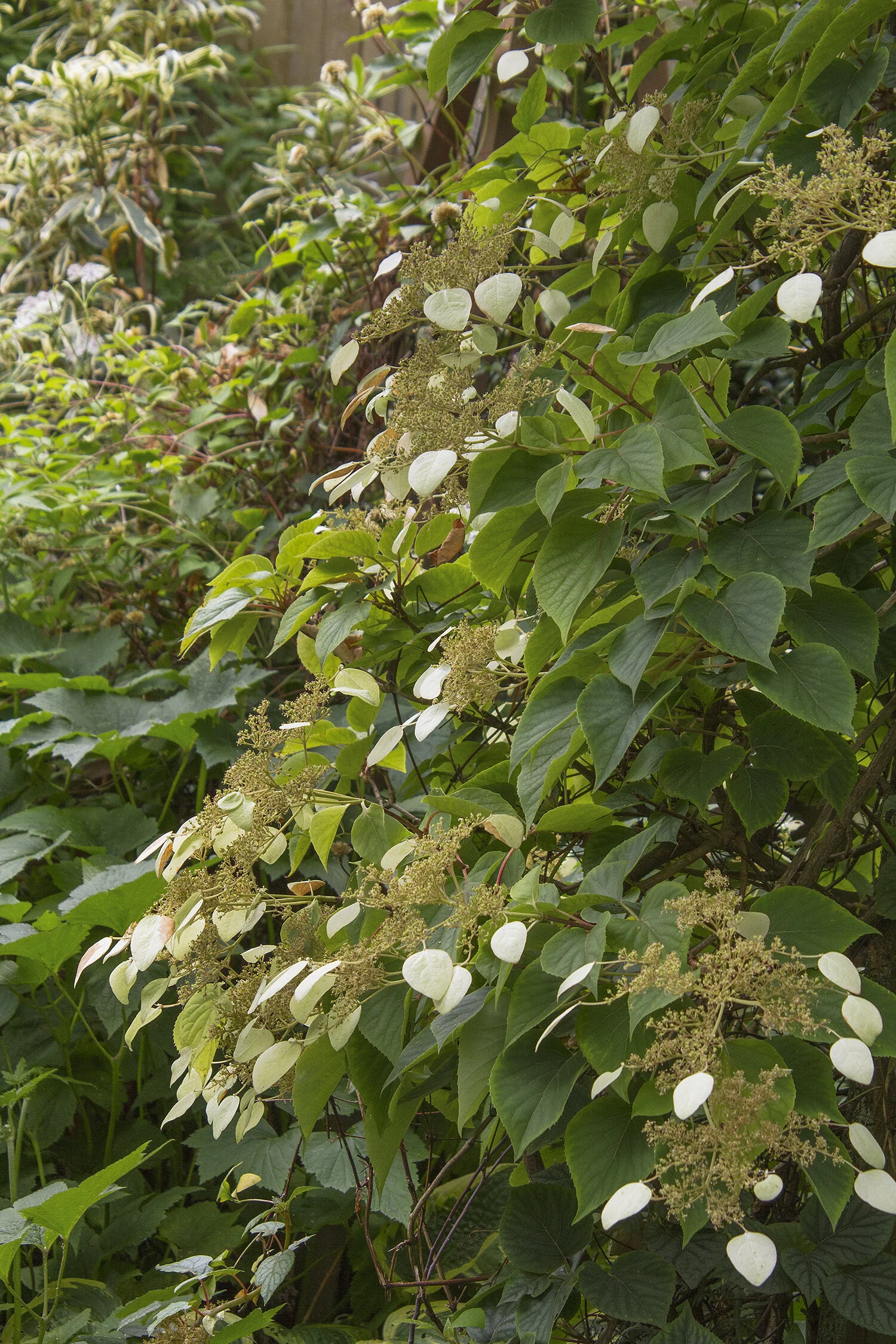
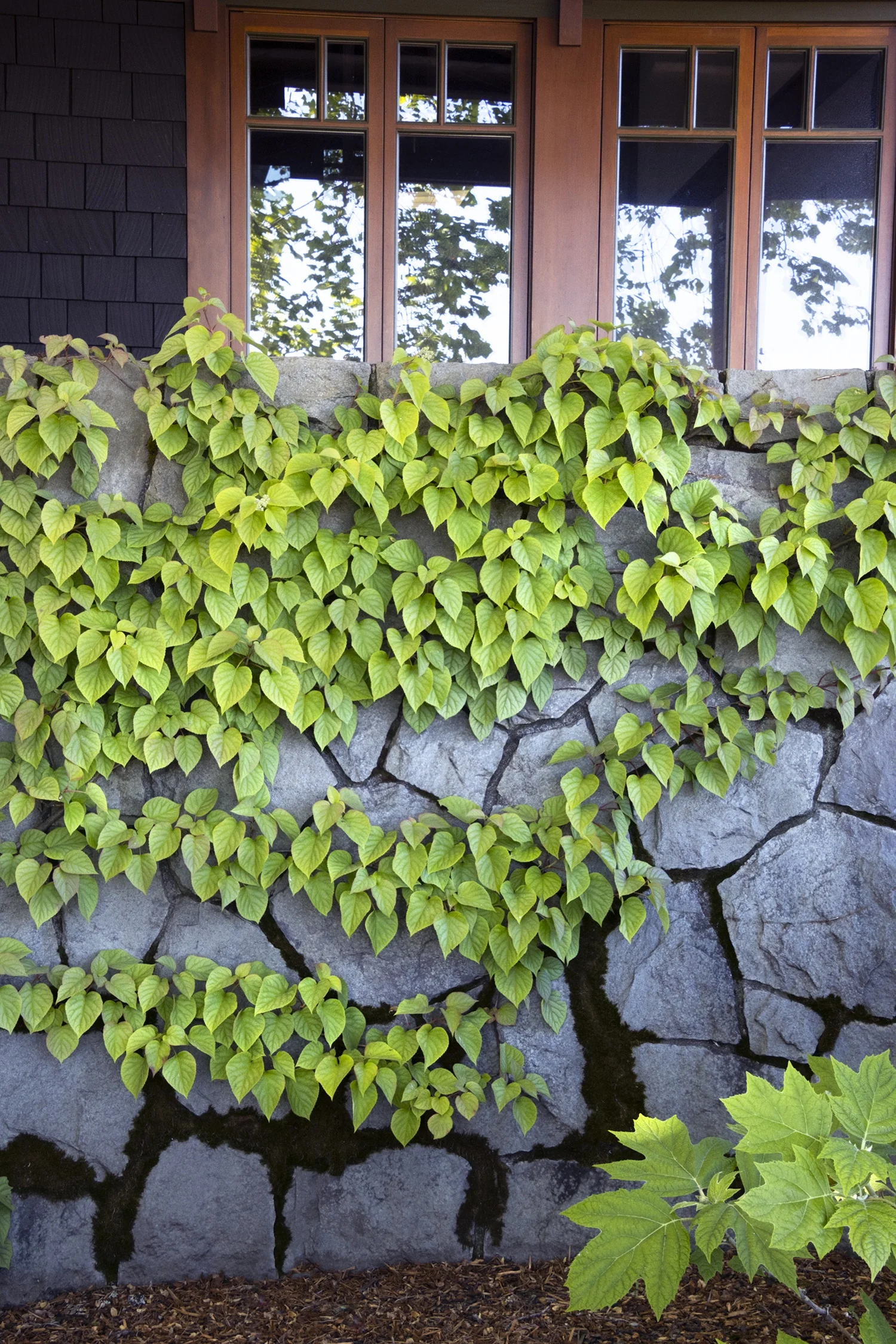
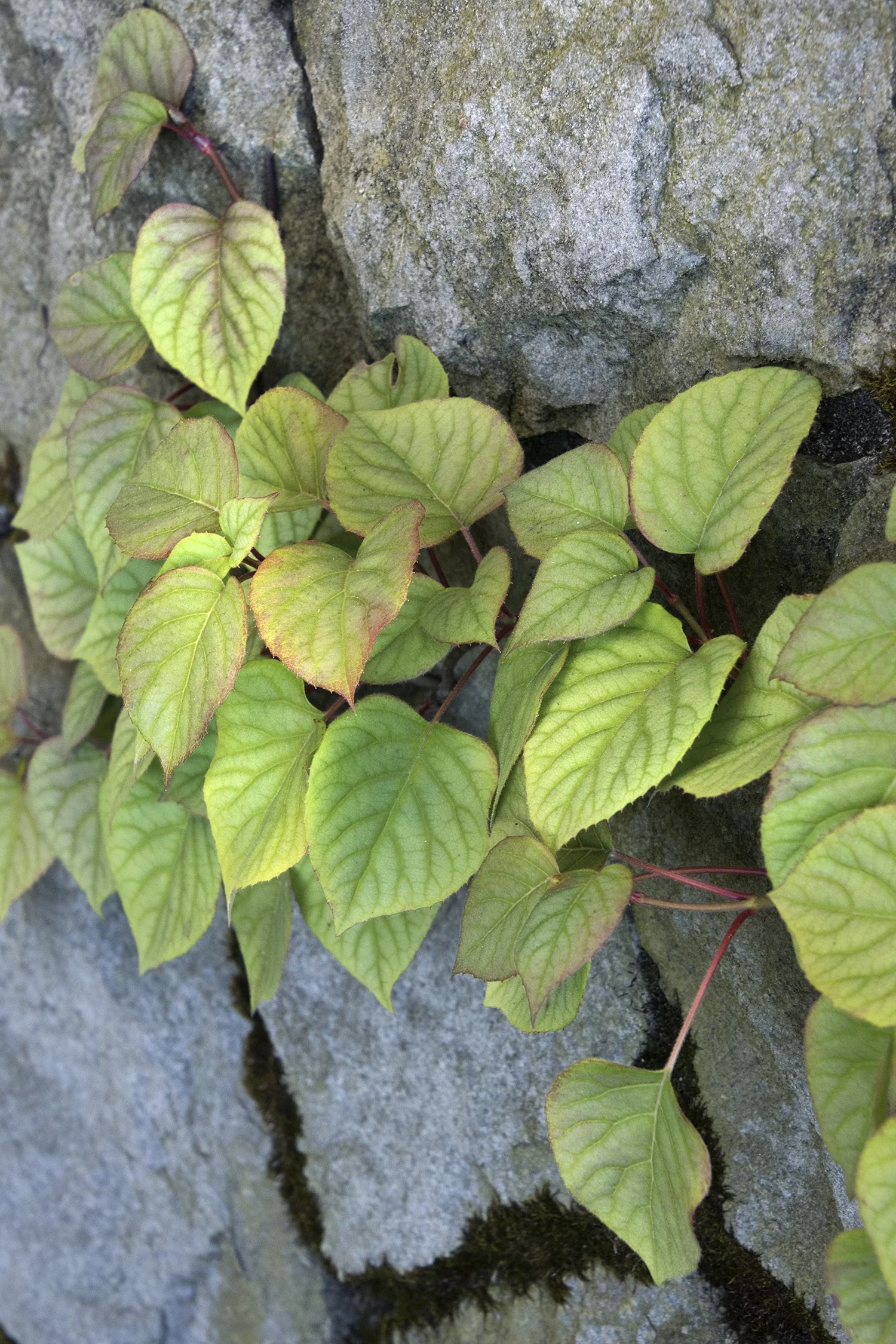
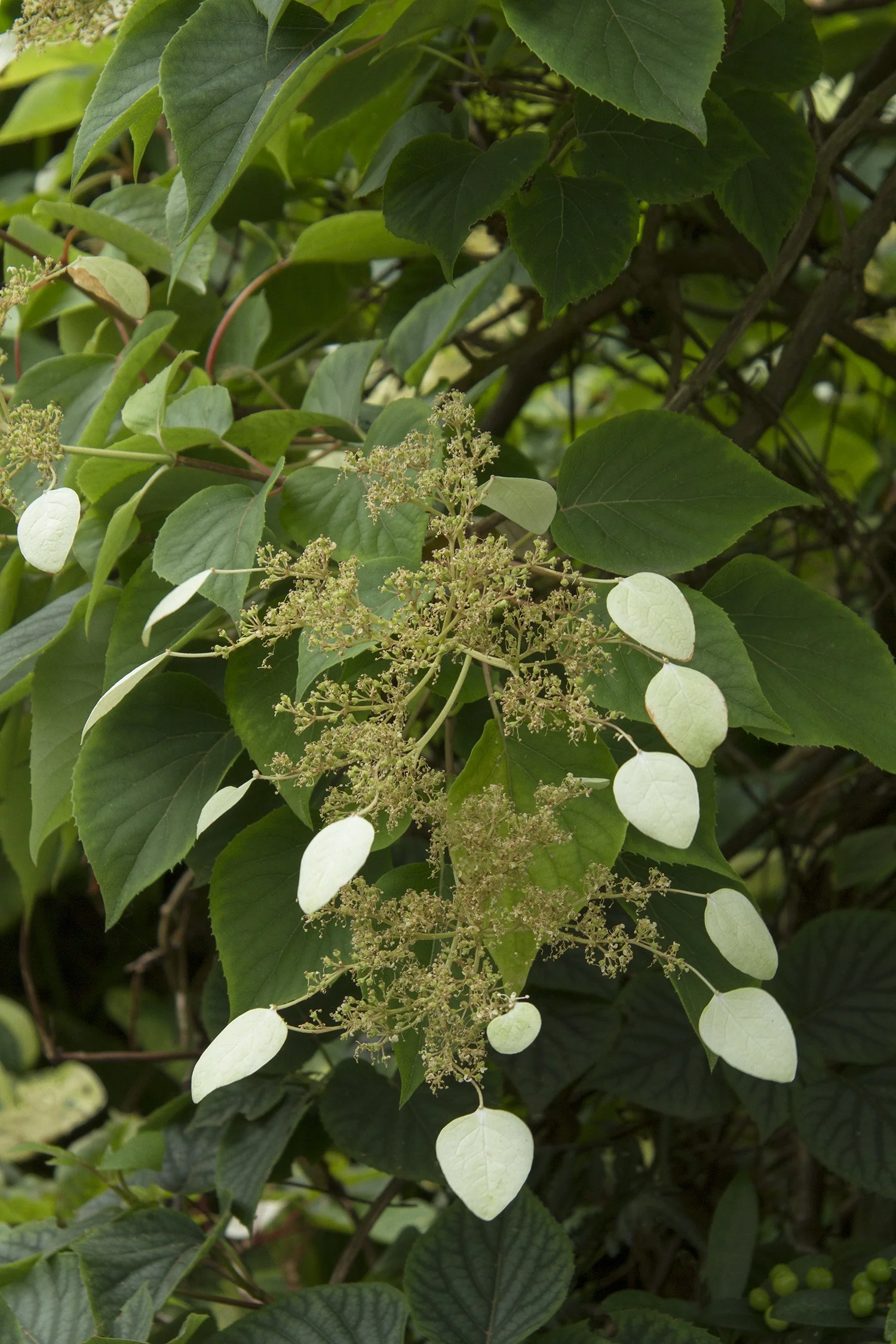
| Description | A superb self-clinging vine with huge, creamy white lacecap hydrangea-like blooms. As the vine matures the fragrant flowers will increase in abundance. The silvery blue-green heart-shaped leaves turn yellow in the fall. The bare woody twining stems will provide interest in the winter landscape. Ideal for covering fences or masonry. Deciduous. |
|---|---|
| Bloom Time | Summer |
| Deciduous/Evergreen | Deciduous |
| Special Features | Dramatic Foliage Color, Easy Care, Fall Color |
| Growth Rate | Slow |
| Growth Habit | Climbing |
| Flower Attributes | Fragrant, Showy Flowers |
| Landscape Use | Espalier, Privacy Screen, Ground Cover |
| Flower Color | White |
| Foliage Color | Green |
| Foliage Fall Color | Yellow |
| Companion Plants | Azalea (Azalea); Camellia (Camellia); Japanese Forest Grass (Hakonechloa); Rhododendron (Rhododendron); Astilbe (Astilbe) |
| Care Instructions | Thrives in humus-rich, moist soils. Provide support such as a trellis, arbor, or large tree for self-adhering stems to climb. Water deeply, regularly during the first growing season to establish an extensive root system; reduce frequency once established. Fertilize when new growth begins in spring. Prune annually to control size. |
| Lore | The genus name Schizophragma comes from the Greek for “divided wall”, referring to the split walls of its fruiting structure. Schizophragma species are in the Hydrangea family. While their flower showy flower heads somewhat resemble that of lacecap hydrangeas which are superficially close to the climbing hydrangeas, the flowers of Schizophragma can offer a greater presence to the shaded garden. |
| Size | #2 – 1.6 Gallon – Staked |
|---|