
LIGHT: Full sun, Partial sun
WATER: Water when top 2 inches of soil is dry.
SIZE: Twining stems quickly reach 15 to 20 ft. long.
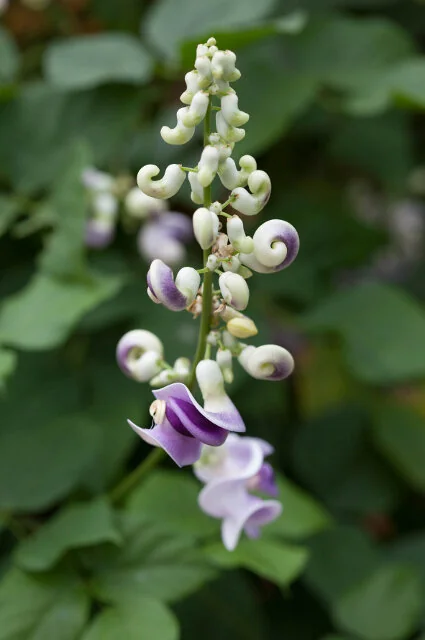
| Description | Intriguing snail shell-shaped blooms start out white and unfurl to purple-pink. This perennial vine provides attractive cover for fences and walls in frost-free regions. Plant where its faint hyacinth-like fragrance can be enjoyed, climbing up an arbor or trellis, or spilling over a patio tub or rock wall. Semi-evergreen. |
|---|---|
| Bloom Time | Midsummer to early fall |
| Deciduous/Evergreen | Semi-Evergreen |
| Special Features | Easy Care, Attracts Pollinators, Fast Growing |
| Growth Rate | Fast |
| Flower Attributes | Fragrant, Showy Flowers |
| Landscape Use | Container, Espalier |
| Flower Color | Purple |
| Foliage Color | Green |
| Companion Plants | Lantana (Lantana); Princess Flower (Tibouchina); Foxtail Fern (Asparagus densiflorus); Tropical Hibiscus (Hibiscus rosa-sinensis); Dracaena Palm (Cordyline); Salvia (Salvia); Shasta Daisy (Leucanthemum) |
| Care Instructions | Provide well-drained soil. Thrives in warm, humid conditions. Water deeply, regularly during the first growing season to establish an extensive root system. Feed with a general purpose fertilizer before new growth begins in spring. Protect from harsh winter conditions. |
| History | The species Vigna caracalla (syn. Phaseolus caracalla) is a leguminous vine from the family Fabaceae, originating in tropical South America and Central America. The species name caracall is a corruption of the Portuguese caracol, meaning snail. It was introduced into European gardens from its native South America in the eighteenth century. Whether Thomas Jefferson ever received seeds or plants of the species is not entirely validated, but it is said that he introduced the plant to America, and it was being grown in American gardens by the 1830s. |