
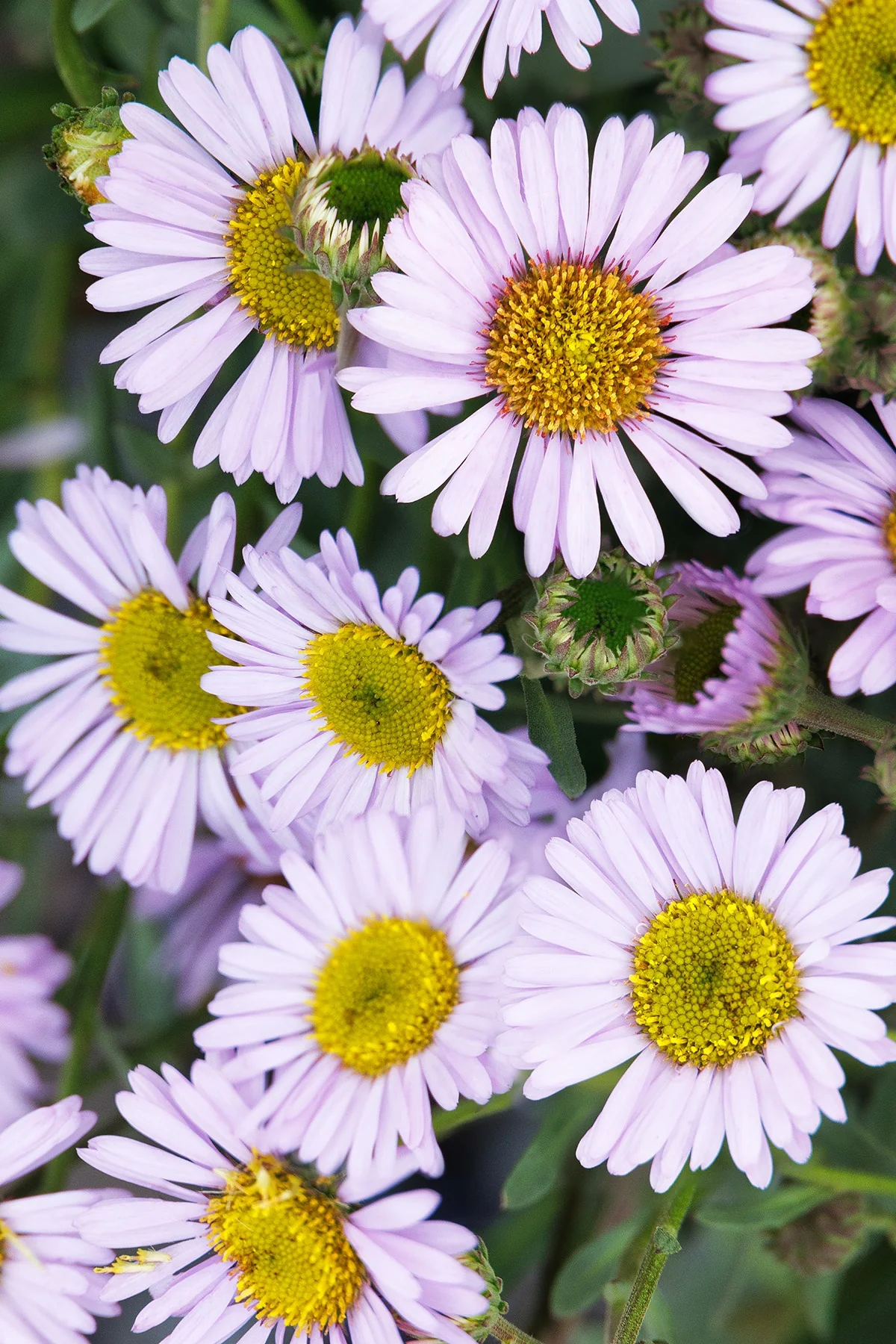
Wayne Roderick Seaside Daisy
$56.00 Original price was: $56.00.$16.80Current price is: $16.80.
1000 in stock
SKU: 6KJuRJ8VtH
Category: CRAFTSMEN PICKS
LIGHT: Full sun
WATER: Water when top 2 in. of soil is dry.
SIZE: Foliage reaches 2 in. tall, 1 to 2 ft. wide. Flowers reach 1 ft. tall.
| Description | A naturally occurring hybrid of the California native seaside daisy and another Erigeron species that is more tolerant of heat. Lavender daisies on slender stems grow 10 inches above low rosettes of narrow leaves. Loved by bees and butterflies, and tolerates heavy clay soil and seaside conditions. Evergreen perennial. |
|---|---|
| Bloom Time | Summer |
| Deciduous/Evergreen | Evergreen |
| Special Features | Attracts Butterflies, Attracts Pollinators |
| Problems/Solutions | Coastal Exposure |
| Growth Rate | Moderate |
| Flower Attributes | Showy Flowers |
| Landscape Use | Border, Container |
| Flower Color | Purple |
| Foliage Color | Green |
| Care Instructions | Best adapted to coastal conditions. In inland hot areas, will bloom profusely in spring but burn in summer. Needs occasional to regular summer irrigation. Thrives in rich soils, but can tolerate heavy clay. If plants get lanky, cut back 1 to 2 inches of stem in late fall. Deadhead to encourage continued bloom. |
| History | ‘W.R’ was spontaneous garden seedling discovered by Wayne Roderick, who determined it is most likely a cross between Erigeron glaucus and another Erigeron species. Erigeron ‘W.R’ is not to be confused with Erigeron glaucus ‘Wayne Roderick’, which is a different selection entirely. |
| Lore | The name for the genus Erigeron comes from the Greek words ‘eri’ meaning early or perhaps ‘erio’ meaning wooly and ‘geron’ meaning “old man” which alludes to the bristly or wooly seed heads. |