
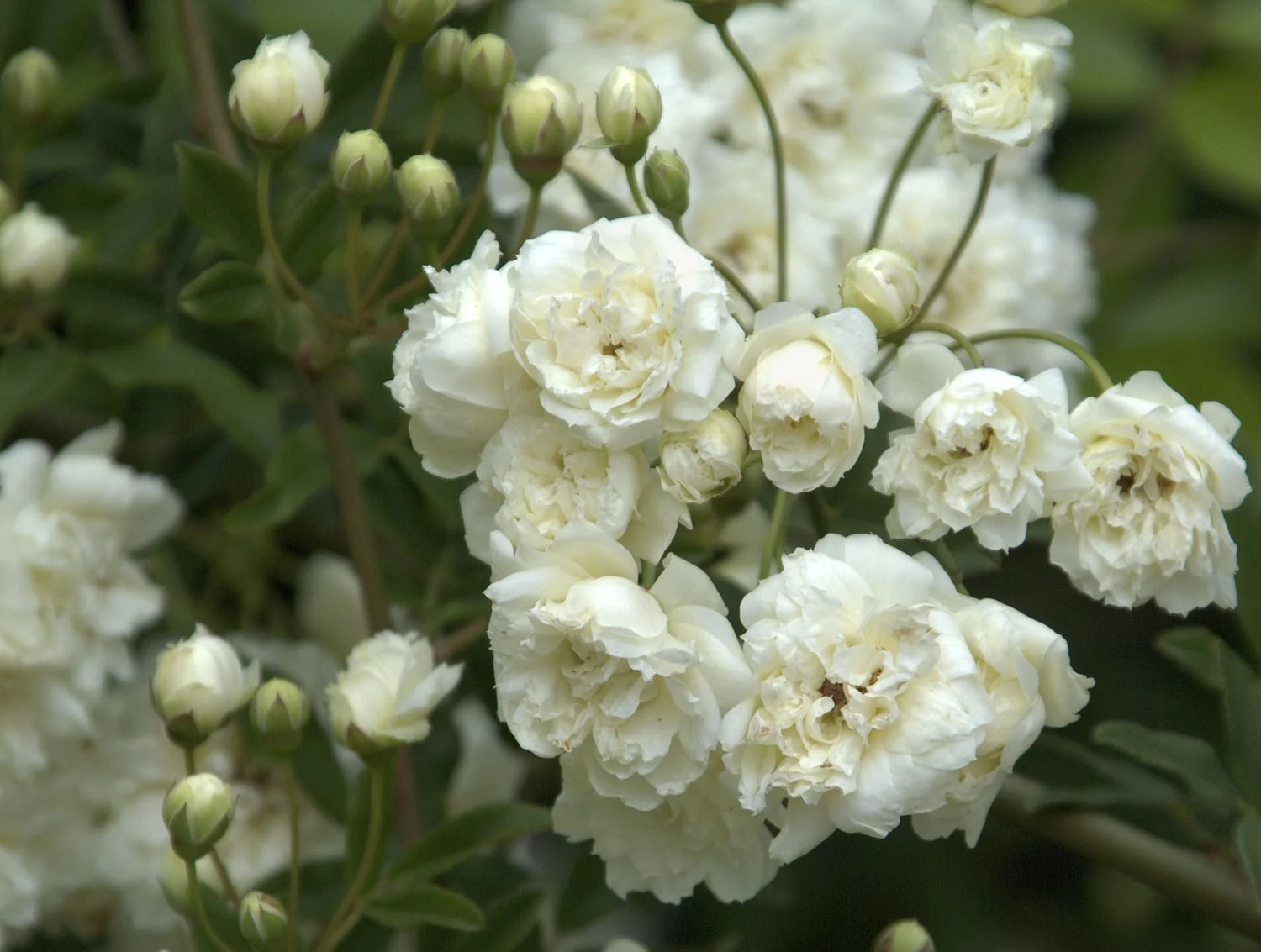
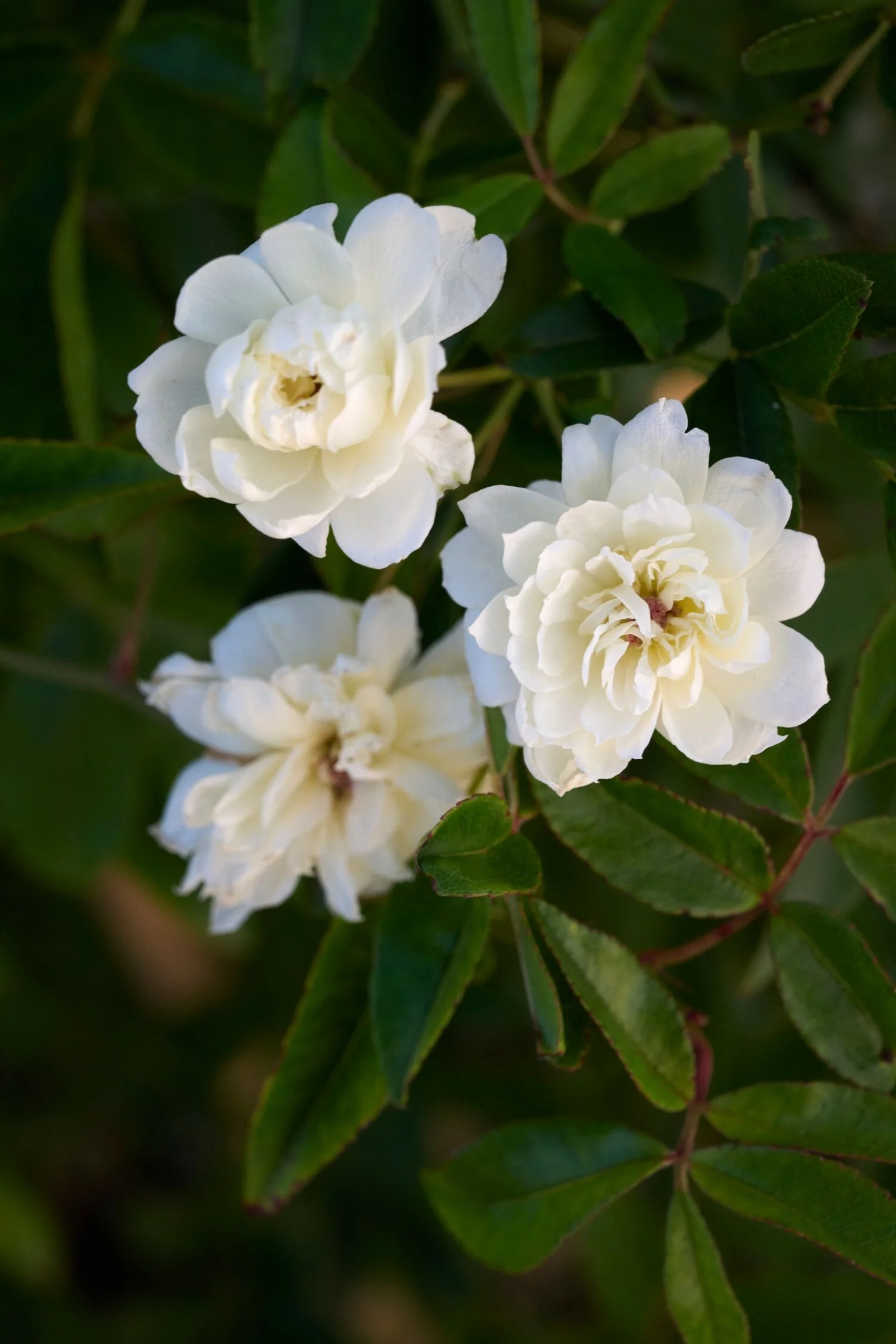
White Lady Banks Climbing Rose
$56.00 Original price was: $56.00.$16.80Current price is: $16.80.
1000 in stock
SKU: 8stk6mtB35
Category: Heat Lovers
LIGHT: Full sun
WATER: Water when top 3 inches of soil is dry.
SIZE: Fast growing, vining habit; reaches 15 to 20 ft. tall, with support.
| Description | A vigorous climber with rich green foliage on nearly thorn-free slender branches. Lightly fragrant, miniature, white, double blooms are quite profuse. Bursts into bloom in spring to early summer; does not repeat bloom. Evergreen in milder climates. A fine climber for arbors. |
|---|---|
| Bloom Time | Spring to early summer |
| Deciduous/Evergreen | Semi-Evergreen |
| Special Features | Easy Care, Improved Pest and Disease Resistance, Non-toxic to Cats and Dogs, Fast Growing |
| Problems/Solutions | Coastal Exposure |
| Growth Rate | Fast |
| Flower Attributes | Flowers for Cutting, Fragrant, Showy Flowers |
| Landscape Use | Barrier, Espalier, Privacy Screen |
| Design Ideas | A beautiful sight billowing over a roof, fence or sturdy arbor, this Rose thrives with full sun and room to run. Long canes should be secured so that they are not damaged or broken. |
| Flower Color | White |
| Foliage Color | Green |
| Companion Plants | Clematis (Clematis); Peony (Paeonia); Eastern Snowball (Viburnum); Boxwood (Buxus); Salvia (Salvia) |
| Care Instructions | Grows easily in average to enriched, evenly moist, well-drained soils. Water deeply, regularly during first growing season to establish an extensive root system; reduce frequency, once established. Feed with a general purpose fertilizer. Provide support such as a trellis or arbor. Blooms on old wood; prune just after flowering. |
| History | This is a unique once-blooming rose in many ways. First it is virtually thornless; second it is nearly tropical being so frost tender, and third, it is evergreen . This rose originates in China and there called “woody perfume flower”. The first to arrive was a double white procured by William Kerr from a garden in Kwangzhou near Canton while he lived and collected there from 1803 to 1811, jointly sponsored by Royal Botanical Gardens at Kew and the Dutch East India company. His white rose arrived at Kew in 1807. It was classified by English botanist Robert Brown, who chose the name in honor of the wife of the director of the garden, Sir Joseph Banks. |