
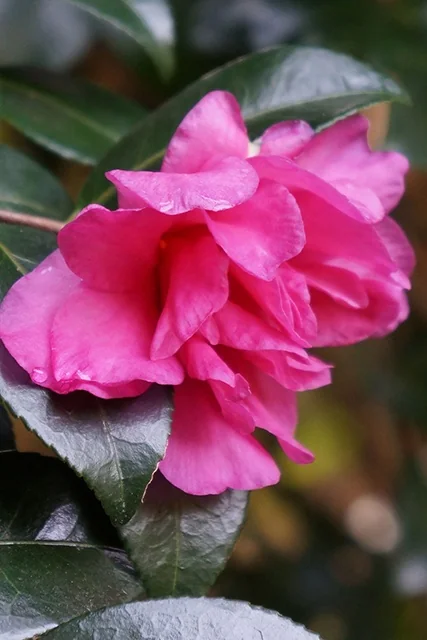
William Lanier Hunt Camellia
$60.00 Original price was: $60.00.$18.00Current price is: $18.00.
1000 in stock
SKU: keB4Gj0FLE
Category: Shady Areas
LIGHT: Filtered sun, Full sun, Partial shade, Partial sun
WATER: Water when top 3 inches of soil is dry.
SIZE: Slowly reaches 10 to 20 ft. tall, 5 to 12 ft. wide.
| Description | A profusion of very showy, small- to medium-sized, deep rose-red, loose peony-like blooms in mid-fall. A vigorous growth habit with a rounded, upright form, and new burgundy foliage that ages to a lush, glossy green. This versatile shrub works well as a natural hedge, screen, border planting, or specimen plant. Evergreen. |
|---|---|
| Bloom Time | Fall |
| Deciduous/Evergreen | Evergreen |
| Special Features | Easy Care, Non-toxic to Cats and Dogs |
| Growth Rate | Slow |
| Landscape Use | Border, Espalier, Hedge |
| Flower Color | Pink |
| Foliage Color | Green |
| Companion Plants | Winter Daphne (Daphne); Forsythia (Forsythia); Fern (Woodwardia); Azalea (Azalea); Lily of the Valley (Pieris) |
| Care Instructions | Provide organically rich, well-drained, acidic soil. Keep roots cool with a thick layer of mulch. Tolerates more sun in cool summer regions. Water deeply, regularly during first growing season to establish an extensive root system; reduce frequency, once established. Prune lightly to shape and feed with an acid fertilizer after flowering. |
| Lore | Sometimes referred to as Christmas Camellias, the sasanqua varieties of Camellia are native to the evergreen, coastal forests of southern Japan. It was introduced by Dutch traders into Europe in 1869. The Japanese use the leaves of sasanqua to make tea, and the seeds are pressed into tea seed oil for use as a lubricant and in cooking and cosmetics. |